
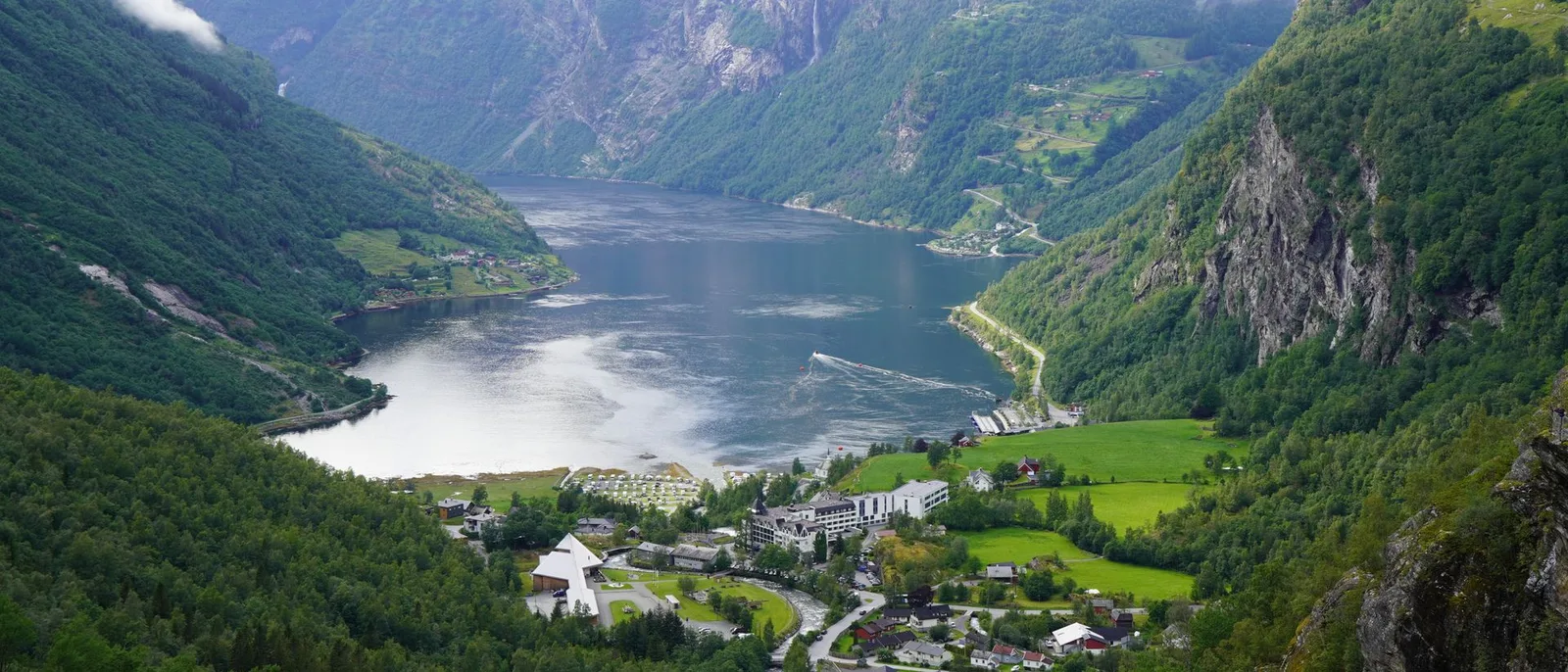
Norway has a population of five and a half million. Compared to the global English speaking market, that figure can seem almost negligible. But the numbers start to look very different once you consider what Norwegians earn and how freely they spend.
I have built many websites whose success depended entirely on organic traffic. Some were .com sites, written in English, targeting the whole world. Others were .no sites, written in Norwegian, aimed at a single small Nordic country. The Norwegian projects consistently perform better, and by a wide margin.
Running sites in two markets
Running English and Norwegian sites side by side is the closest thing to a controlled experiment I have had. Same person, same methods, same standards for content. The only variable that changes is the language and the audience.
The English sites are a grind. You publish something good, you wait, and you watch it sit on page four behind a wall of sites with a decade of links and full time teams. Sometimes it climbs. Often it does not. Nothing about the work is wrong, there is simply an enormous amount of competition for every single phrase.
The Norwegian sites behave differently in a way that surprised me the first time, and stopped surprising me somewhere around the fourth.
Norwegian search is far less crowded
There is a very simple reason for this. Norwegian is spoken by roughly five and a half million people. That is not enough to attract the giant content operations that dominate English search, and it is not enough for most international brands to bother translating properly. So what fills Norwegian results is a mix of local businesses, a handful of established media sites, and a lot of pages that were clearly machine translated and never read by a Norwegian.
If you show up with something written properly, you are not competing with a hundred well funded sites. You are often competing with four or five.
Domain authority to 25 in six weeks
On one Norwegian project I took a brand new domain from nothing to a domain authority of 25 in about six weeks. I have never come close to that pace on an English site, and I was not doing anything exotic. Decent content, a handful of real Norwegian links from people who actually knew the site existed, and patience measured in weeks rather than years.
Ranking 50+ difficulty keywords inside two months
On the same project I picked up keywords sitting above 50 on the usual difficulty scales, and landed on page one for several of them in under two months. In English a 50 difficulty keyword is a serious project. You plan for it, you build for it, and you might still lose. In Norwegian a 50 can mean the top results are a forum thread from 2019 and a badly translated product page.
I want to be honest about what those numbers mean. Difficulty scores are estimates, and they are calibrated mostly against English data, so they overstate how hard Norwegian terms really are. That is precisely the point. The tools tell you a Norwegian keyword is hard, you check the actual results, and you find nobody is defending it.
A tenth of the traffic, the same income
Here is the number that changed how I think about this. My Norwegian sites pull roughly a tenth of the organic traffic my English sites do. They earn about the same.
Norwegians are wealthy, and they behave like it. High income, high trust in buying online, and very little hesitation about paying a fair price for something good. They also tend to arrive at a page already knowing what they want. The searches are specific, the intent is commercial, and the distance between reading and buying is short.
So the maths is not close. Ten thousand Norwegian visitors are worth what a hundred thousand English visitors are worth, and the ten thousand are far easier to get.
Why Norwegians will not click a non .no domain
This is the part people from outside Norway underestimate, and it is the reason this page exists on a domain trustee’s website.
They read the address bar
Norwegians are cautious buyers and they are technically literate. They understand what a domain is. They look at it. A .no address tells a Norwegian visitor that somebody went through a Norwegian process, and that there is something real behind the site. It is a small signal and it does a lot of work.
Norwegian text on a .com reads as fake
The strongest version of this: a site written in Norwegian sitting on a .com or a .net actively loses people. It looks like a scraped translation or a scam. I have watched it happen in analytics, and the behaviour is not subtle. They arrive, they see the address, they leave. It is not a preference. It is closer to a reflex.
So if you plan to publish in Norwegian, the domain is not decoration. Get it wrong and the best content you have ever written will bounce.
What this means if you are outside Norway
Put those three things together. A market where ranking is genuinely fast, an audience with money and intent, and a hard requirement that you be on the right domain to be taken seriously at all. That is an unusually good opportunity, and the only thing standing in front of it is a registry rule.
Norid, which runs .no, requires the registered holder to be a Norwegian entity. There is no clever route around that and anyone selling you one is lying. What there is, written into the registry’s own framework, is the trustee arrangement. A Norwegian entity holds the registration, and you hold everything else.
How to actually start
Pick the name first and check it, because the good short Norwegian words go early and there is no point planning around a name you cannot have. Write in real Norwegian rather than translated English, because Norwegians can tell within a sentence. Then be patient for weeks rather than years, which is a luxury this market gives you and almost no other one does.
If the domain part is what is blocking you, that is the thing I do. Check whether your name is free, and if you would rather talk it through first, write to me. I will give you a straight answer about whether Norway suits what you are selling, and I will not charge you for the conversation. If you want the mechanics first, read how to actually get a .no domain when you are not Norwegian, or whether a foreign company can register one at all. Or for the short version of all of it in one place, see the .no domain guide.
Ready to claim the name?
We hold the Norwegian requirement as your trustee. You keep the DNS, the hosting and the email. $89 a year with the registration included.
A note on the numbers above. They are from my own projects, and your results will depend on your niche, your content and a fair amount of luck. Ranking difficulty scores are estimates from third party tools rather than facts. I have shared what happened to me rather than what is guaranteed to happen to you.